
AI In The Fraud Prevention: Technologies, Practices and Strategies
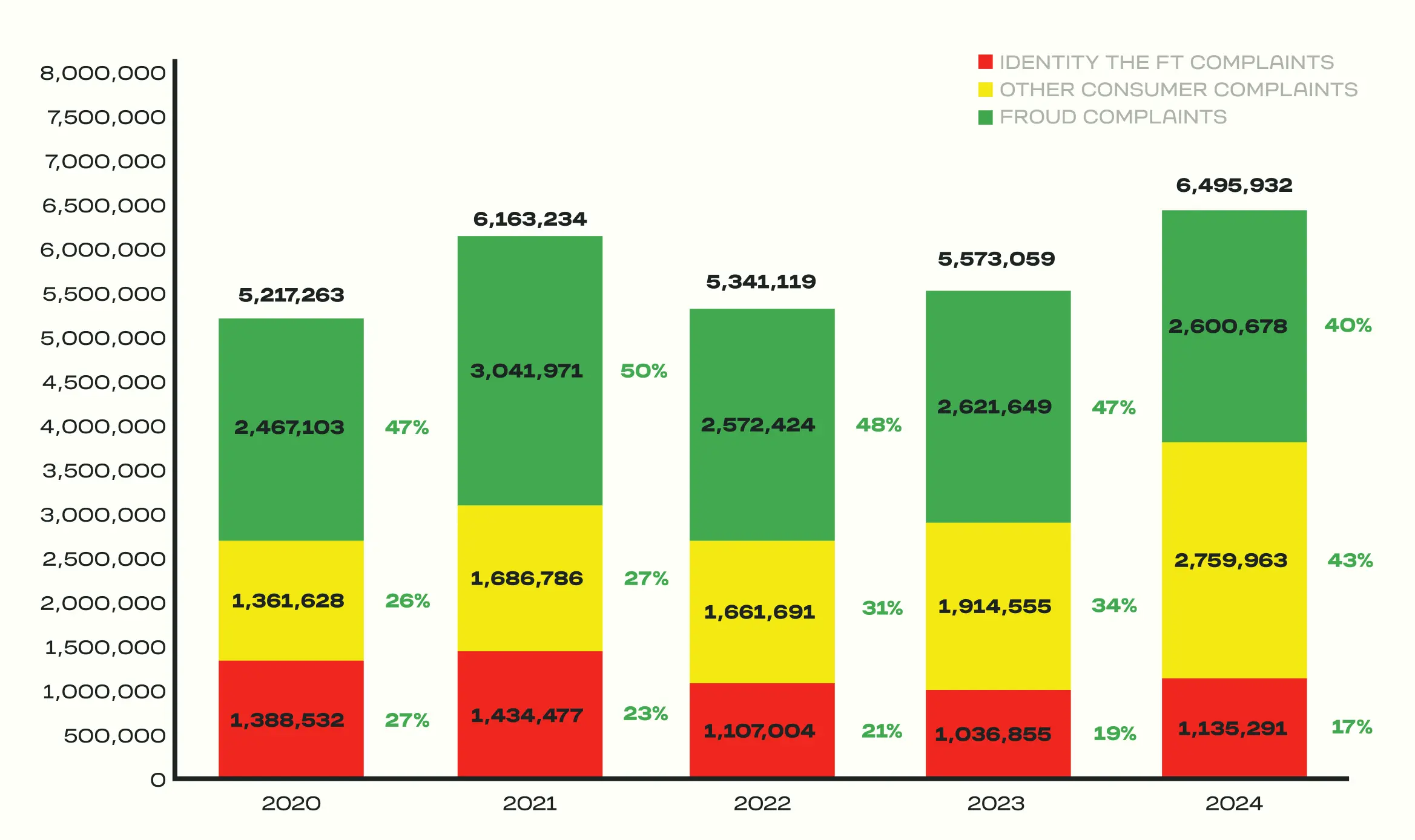
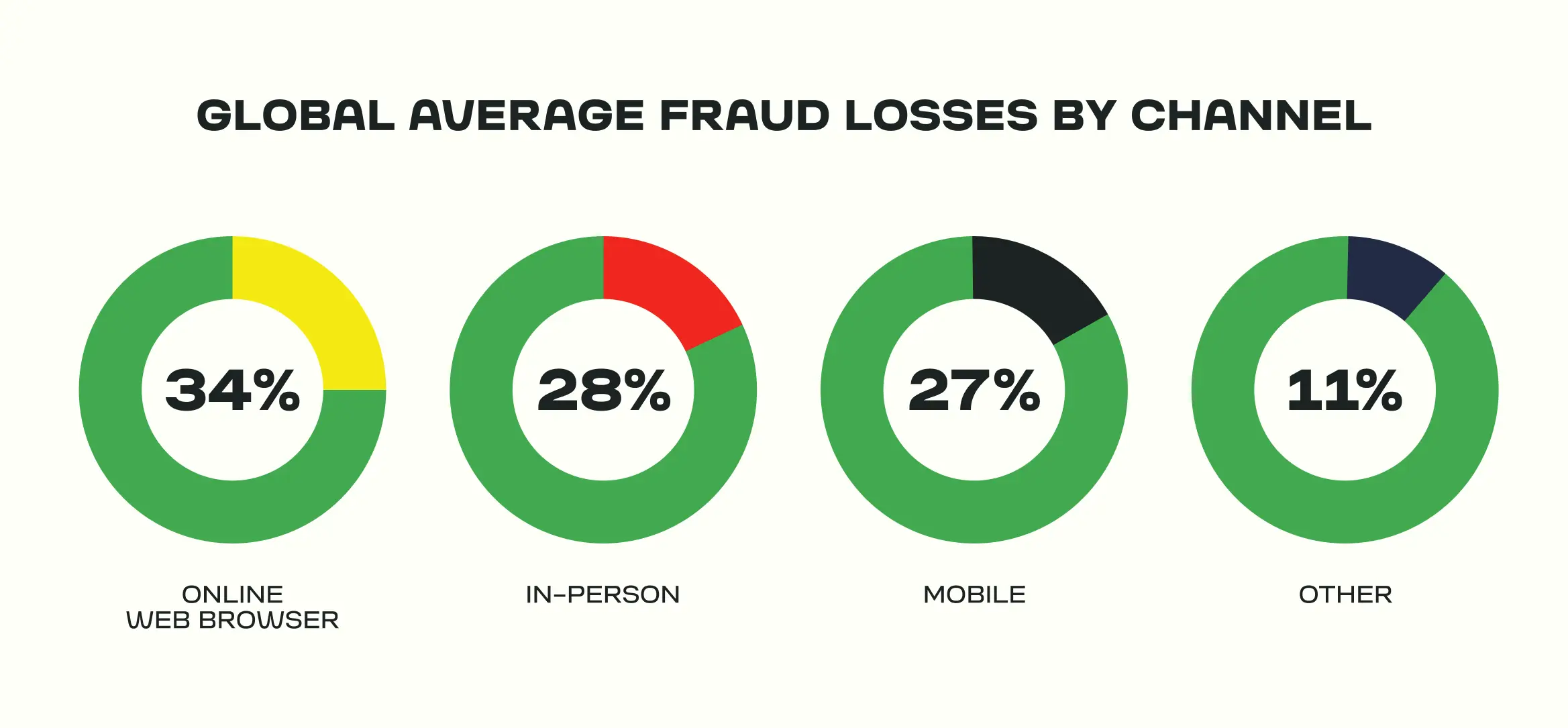
Fraud is becoming more sophisticated, with its non-deterministic (difficult to model or forecast) scale, speed and varied nature exceeding the capabilities of traditional control, detection and prevention methods. This issue is particularly acute in digital ecosystems such as digital and neobanking, retail and e-commerce, iGaming, online marketplaces and peer-to-peer (P2P) platforms which face daily threats that are challenging to predict and even harder to monitor manually. In this context, artificial intelligence (AI) is no longer just a technological trend – it is becoming an essential tool (imperative) for any company seeking to ensure operational resilience, safeguard user trust, and achieve sustainable growth and high user protection.
AI enables real-time anomaly detection, the ability to create and further manage the behavioral profiles, identify hidden connections between accounts, and rapidly adapt to new threats faster than traditional frameworks or scripts can (significantly exceeding the limitations of traditional rule-based or script-driven systems).
However, the deployment of such technologies (anti-fraud operations) requires a comprehensive understanding of both technical capabilities and business limitations (constraints). This article provides a detailed overview of AI-driven anti-fraud systems: functionalities, the advantages, limitations and the scope of application, and covers (highlights) important considerations for developing a strategy based on intelligent risk analysis.
| Aspect | Description | Examples / Tools | Relevance to Industry |
|---|---|---|---|
| AI in Fraud Detection | Use of ML and neural networks to detect suspicious activities automatically. | Classification models, behavioral analysis | Crucial in high-risk sectors (iGaming, banking). |
| Generative AI in Fraud | Enables creation of bot-like behavior simulations, LLM-based scam scripts, deepfakes, or fake docs. | LLM-based scam scripts | Increases the complexity and helps in scaling fraud schemes |
| Benefits of AI Solutions | Real-time detection, scalability, cost-efficiency, and improved accuracy. | Frogo AI platform | Enhances user trust and operational efficiency. |
| Implementation Challenges | Lack of transparency (black box), offline fraud detection limits. | Neural nets with limited explainability | Requires human oversight and hybrid strategies. |
| Future Trends | Movement toward predictive, self-learning, and federated AI models. | Dynamic behavior modeling, meta-learning | Supports proactive and collaborative fraud defense. |
Understanding AI-Driven Fraud Detection Technologies
AI fraud detection refers to the use of machine learning algorithms and neural networks to automatically detect anomalous or suspicious activity in the digital ecosystems. These technologies process and analyze large amounts of transactional data, user behavior, and historical patterns to detect anomalies that indicate potential fraud. Unlike traditional rule-based approaches, AI models have the ability to adapt to new fraud and falsification methods without the need for constant manual updates.
In the iGaming industry, where millions of transactions take place in real time, artificial intelligence plays an important role for operators, helping to minimize financial losses and protect their brand reputation. AI systems are capable of detecting complex and sophisticated fraudulent activities, including the use of multi-accounting, bonus-hunting / abuse, the use of bots and geolocation manipulation. By learning and further training on new data, these systems adapt, significantly reducing false positives and enhancing the accuracy of risk-based decision-making.
The algorithms used range from traditional classification models to advanced ensemble methods and deep neural networks. These models can be trained on proprietary datasets with general and secondary external sources such as device fingerprinting, behavioral biometrics, and contextual information. Integrated explainability frameworks (e.g., SHAP or LIME) allow for greater transparency for compliance teams and facilitate seamless integration into existing risk management workflows.
The market for AI-driven anti-fraud detection solutions is showing a steady growth, driven by increasing demand for advanced, real-time risk mitigation features with products available from both large B2B vendors and niche startups. As an important component of modern fraud prevention solutions, AI-based solutions are often integrated with payment monitoring systems, KYC/AML compliance mechanisms, and behavioral analytics platforms, forming a comprehensive and unified ecosystem for effectively combating digital fraud.
The progressive evolution of AI in fraud prevention (phased approach)
- Rule-based systems and manual checks
- Introduction of machine learning for behavior analysis
- Integration of neural networks and real-time detection
- Use of contextual signals and digital fingerprinting
- Business logic-driven automation and identity verification (e.g., Frogo AI)
Phase 1: Rule-based systems and manual checks
In the early stages of anti-fraud tooling development, organizations mainly used static rule-based systems and manual incident analysis. These solutions were developed and designed based on predefined scenarios such as transaction volume thresholds, geographic restrictions, and time-based activity filters. While this approach was effective against simple, basic and predictable fraud patterns, this methodology lacked scalability and adaptability to new and more complex attack vectors. Any deviation or changes in attacker behavior required a revision of the rules, which increased the burden on risk management teams and decreased overall agility.
Phase 2: Machine Learning and Behavioral Analysis
With the development of technology and the increase in data volume, the iGaming industry has gradually implemented machine learning algorithms to improve fraud detection capabilities. Unlike traditional rule-based systems, these algorithms / models were trained on historical datasets to identify patterns that may indicate fraudulent behavior. Behavioral analysis has become a crucial component of this approach, as the systems began to evaluate a wide array of metrics and indicators such as click rate, navigation patterns, device changes, session timing, and other user interaction metrics. This allowed it to reduce false positives and enhance the system’s ability to dynamically adapt to emerging threat vectors without the need for manual intervention.
Phase 3: Advanced AI and Real-Time Threat Prevention
Modern fraud detection systems use advanced, multi-layered neural network architectures that aggregate and analyze data from various sources: including connected devices, geolocation data, payment activity, digital fingerprints, and user behavior patterns. These solutions provide real-time fraud detection and risk assessment with low latency and high detection accuracy. A notable example is Frogo AI, which utilizes machine learning to conduct risk assessments based on business logic, and detect fraudulent activities such as the use of multi-accounting even in scenarios involving VPN obfuscation, device emulation, or browser spoofing techniques. This level of sophistication substantially reduces the dependency and need for manual checks and increases process scalability in high-volume B2B transactional environments.
The Evolving Fraud Landscape: Impact of Generative AI on Threat Vectors and Detection Strategies
The Role of Generative AI in Enabling and Evolving Fraud Tactics
The emergence of generative AI has significantly expanded the capabilities for threat actors, enabling the automation and scaling of sophisticated attacks. Moreover, fraudsters have begun deploying large language models (LLMs) to bypass anti-fraud logic: they conduct A/B Testing and refine their attack vectors, effectively training their scripts to adapt and dynamically bypass detection systems.
In the iGaming industry, generative AI models are increasingly being used to simulate complex player behavior, including automated interactions such as slot activity, betting patterns, customer support requests, and even the emulation of an entire gaming session. This feature enables testing and identifying vulnerabilities in bonus programs and player/platform restrictions. Additionally, there has been an increase in the use of generated text and content in large-scale referral and arbitrage fraud schemes. As a result, traditional fraud detection systems based on static rule sets and pattern recognition are becoming insufficient without the integration of advanced contextual analysis and digital behavioral analytics methods/intelligence.
Generative AI as a Core Component in an Anti-Fraud Operations
On the other hand, the same technologies are actively being integrated into next-generation fraud protection systems. Generative AI is used to simulate attack scenarios, allowing defense mechanisms to be tested in advance. It is also used to generate training samples in cases where labeled data is scarce and particularly critical for addressing rare, complex fraud schemes and patterns. Advanced platforms, such as Frogo AI, are capable of generating dynamic behavioral profiles based on synthetic models rather than static templates, enabling the detection of anomalies even for completely new attack vectors.
Generative AI offers and drives a significant advancement in the automation of Frogo analytics. Instead of relying on standard reports, analysts (experts) now receive and compose comprehensive case reports that outline probable scenarios and provide recommendations based on data. This advancement accelerates the response time of security teams, allowing them to focus on unique, non-standard, or critical incidents. Furthermore, generative models are particularly valuable where labeled data is scarce, allowing Frogo to generate training samples for rare and complex fraud patterns. Frogo ensures transparent and readable responses for its business clients.
Key Benefits and Impacts of AI in Fraud Detection
Real-time fraud detection and prevention
Artificial intelligence systems are capable of detecting and blocking fraudulent activity in real time, eliminating the need for manual intervention and reducing response times to zero. This feature is particularly important in high-transaction environments such as the iGaming sector, where millions of user interactions and transactions are processed simultaneously. The use of a real-time assessment system / scoring that incorporates behavioral and technical indicators allows for proactive fraud risk mitigation by identifying and containing threats before they impact broader business operations. Advanced solutions such as Frogo provide continuous, context-aware monitoring at the session level, tailored to the specifics of each session.
Scalability or Enterprise-Grade Scalability
Traditional manual methods are having difficulties managing the growing volumes of data and growing complexity of fraud schemes. AI-based solutions are scaled horizontally, allowing “millions” of events to be processed per day without compromising performance, quality, or accuracy. By leveraging the distributed architecture and multi-service design, Frogo offers flexible integration capabilities for both individual B2B platforms and large operators with complex distributed infrastructure. This architecture enables seamless onboarding of new data sources, geographic regions, and business segments without the need to completely redesign the existing anti-fraud logic.
Cost Reduction and Resource Optimization
The integration of artificial intelligence (AI) into anti-fraud workflows and processes significantly improves operational efficiency by automating threat detection and response, reducing the manual workload on compliance and support teams. Automating case analysis and minimizing false positives optimizes operational costs. This reduces the reliance on resource-intensive manual checks and additional user audits. Platforms such as Frogo provide the ability to customize triggers and rules to meet specific business objectives, eliminating the need for costly, one-size-fits-all frameworks.
Improved Accuracy in Process Execution and Output
Frogo utilizes advanced AI models to analyze a wide range of attributes, including user behavior, device specifications, transaction history, geolocation, and interaction patterns with the interface. This multifaceted and complex analysis significantly improves detection accuracy compared to traditional rule-based systems or basic assessment and validation methods. The platform demonstrates reliable capabilities in detecting complex fraud scenarios, including sophisticated schemes involving multiple accounts and bonus abuse schemes. Notably, Frogo maintains high precision with minimal false positives, even in cases involving anti-detect browsers and mobile proxy networks.
Reinforcing Customer Trust and Satisfaction
Reliable and transparent security mechanisms directly improve the brand perception of its end users. Rapid and accurate verification, minimal false positives, and transparent decision-making contribute to building confidence and trust. Solutions such as Frogo, enable organizations to deliver clear, actionable justifications for risk flags, safeguarding user experience and maintaining high retention rates on B2B customer platforms.
Key Challenges in Using Artificial Intelligence (AI)
Black box effect
One of the main problems with implementing AI in anti-fraud systems and frameworks is the lack of transparency in decision-making processes. It is crucial for B2B transaction makers to understand the rationale behind classifying a user as either fraudulent or legitimate, particularly in the context of compliance obligations and regulatory requirements. However, sophisticated neural network models, such as those integrated into AI Complex Fraud Detection and Prevention platforms, often function as “black boxes,” offering limited interpretability of their results (findings). This lack of clarity complicates efforts to audit, debug business logic, and train the teams responsible for maintaining security processes.
Ineffectiveness against non-digital threats
AI demonstrates high accuracy in analyzing digital behavior, but it remains vulnerable and limited when it comes to solving fraud problems that occur outside of the digital environment. This includes scenarios or cases which may involve collusion between support operators and customers, compromise of physical communication channels, or insider activities. No automated system, including Frogo, can fully track or reliably interpret contextual factors beyond the scope of the data available to it. Solving this problem requires a comprehensive approach that includes expert knowledge, targeted internal investigations, and integration with auxiliary monitoring systems, which increases costs and operational complexity.
Developing a Comprehensive AI fraud detection strategy
Establishing a cross-functional fraud management team
An effective AI-based anti-fraud strategy requires extensive and active collaboration among multidisciplinary experts from various departments, including risk analysts, data engineers, product managers, and compliance officers. By combining these areas of expertise, organizations can accurately interpret models, adapt logic to business processes, and ensure regulatory compliance. As an advanced product, Frogo provides flexible and extensive customization options, however, their successful deployment demands close coordination between technical and operational stakeholders.
Investment in Optimal Tools and Technologies
The selection of a fraud detection platform requires more than just an assessment of algorithmic capabilities. It is important to evaluate the capability for integration with existing IT infrastructure, the availability of APIs, support for explainable AI, compatibility with current and anticipated data sources, and the degree/levels of customization available to meet specific operational and business requirements / needs. Frogo offers advanced built-in tools and integrated capabilities for behavioral fingerprint analysis, multi-accounting identification and triage automation, which makes it a highly relevant and suitable solution for companies with high traffic and real-time processing needs. Its anti-evasion analytics, combined with specialized modules for VPN and emulator identification, provide essential functionality for the iGaming sector, where fraud mitigation and operational integrity are of paramount importance.
Conduct Continuous Monitoring and Updates
AI models can lose accuracy when fraud or attackers behavioral patterns change and new types of threat vectors appear. To mitigate these operational aspects, continuous revisions and updates of the training datasets are required, as well as systematic A/B testing of business rules and performance metrics. Frogo facilitates the retraining models on current data without interrupting production operations, which is an important feature for operators with continuous traffic flows. Integrated analytics function — monitors changes in the player’s risk profile and automatically responds to deviations from the norm, taking into account the business logic of the specific platform.
Establishing a Culture of Operational Safety
Artificial intelligence technologies are considered to be an integral part and just one component of a strategy and advanced course for businesses. It is equally important to foster an organizational culture in which employees not only recognize the importance of fraud prevention, but also clearly understand the principles of how the anti-fraud system / frameworks work. This principle is applicable to all relevant functions, including customer support and KYC departments, as well as product teams responsible for verification processes, bonus policies, and transaction limits. Frogo offers role-specific interfaces that are designed and customized for different levels of system access, which helps to ensure transparency and explainability even in complex investigation scenarios. Effective communication and coordination between both business stakeholders and analytics teams facilitates rapid model adjustments and feature updates, improves detection accuracy, and reduces operational risk.
Regulatory Compliance and Ethical Governance
- Risk of discrimination due to opaque AI decisions
- Importance of model auditability for B2B clients
- Compliance with regulations (GDPR, ISO/IEC 27001)
- Necessity for explainable AI in regulated sectors
- Role of responsible AI in maintaining trust and legal safety
Compliance and Governance Aspects
The integration of AI into anti-fraud systems requires strict compliance with current legislation on personal data processing and financial monitoring. In the B2B sector, the particular emphasis is placed on transparency of models, solutions auditability and compliance with such regulatory frameworks as GDPR, ISO/IEC 27001 and the requirements set by local regulatory bodies in the field of Gambling and Digital Identity. Frogo’s risk assessment and digital user identification algorithms are designed in accordance with legitimate interest scenarios and provide monitoring and verification of decisions made in each specific case.
Ethical Considerations and Implications
Artificial intelligence technologies used to combat fraud are relying on confidential user data, such as behavioral patterns, device information, and geolocation data. This dependency raises concerns about the risks of discrimination, unjustified refusals, and potential breaches of confidentiality. Ethical problems arise when models make decisions without being able to explain them, which undermines the trust of both partners and users / players. This is particularly important in the B2B sector, where clients expect predictability and legal protection when interacting with AI and related automated systems. Frogo combines cutting-edge interpretive frameworks and explainable artificial intelligence (XAI) methodologies, making decisions traceable, reducing the risk of opaque failures, and enhancing trust in the core technological infrastructure.
Principles and Frameworks for Responsible AI
Responsible AI involves a combination of technological efficiency, transparency, ethics, and control over the consequences of algorithm implementation / deployment. This requires constant re-evaluation of models for potential bias, documentation of decision-making logic and processes, and training of teams working with the system. Frogo adheres to the principles of traceable AI: ensuring that every automated action is recorded, interpretable and can be re-evaluated upon request from a client or supervisory authority. These guidelines enable B2B customers to confidently integrate artificial intelligence solutions into their processes/operations without the risk of legal or operational instability.
The Future of Anti-Fraud Strategies Powered by AI
Innovations transforming the Fraud Prevention
Technological advances in AI-based anti-fraud solutions are shifting toward more flexible, adaptive, and context-dependent models. Traditional static assessment is being replaced by solutions that use few-shot and zero-shot learning, enabling rapid response to previously unseen threats. By integrating digital identities, biometrics, and behavioral patterns these systems create dynamic risk profiles that can be updated in real time. Frogo already employs advanced algorithms that monitor changes in players’ sessions and device parameters to detect signs of emulation and spoofing, including the use of anti-detect browsers and proxies.
Modern frameworks incorporate self-learning and meta-learning capabilities, which are crucial in the context of continuous behavioral changes among users and the growing complexity of fraudulent attacks. A separate area of development are generative solutions based on artificial intelligence, which enable the modeling of complex fraud, intrusion and scamming scenarios and system stability testing before an actual incident occurs. Such systems (platforms) as Frogo are progressing towards predictive analytics: instead of responding to the fact of fraud, they are shifting from reactive fraud detection to proactive probability forecasting, using vector representations and graphical models.
Leveraging Innovation to Achieve a Fraud-Resilient Future
The deployment of AI-based solutions in the B2B sector requires robust organizational maturity and a readiness to invest in the creation of an agile infrastructure. Antifraud strategies will increasingly be built and rely on data-driven approaches, where the quality of incoming signals, their completeness and semantic consistency become key advantages. Solutions such as Frogo already provide advanced modules that consolidate data from diverse sources into a single, unified model of player behavior, forming the basis for proactive threat detection.
Collaborative ecosystems between AI solutions providers, platforms and relevant regulators will also play an important role. The exchange and sharing of the anonymized fraud models / patterns, attack signatures, and behavioral clusters will strengthen collective, industry-wide defenses, enhancing resilience against emerging threats. The application of federated learning and secure multi-party data analytics (e.g., using homomorphic encryption) will create the possibility of collaborative operations on the anti-fraud models without data disclosure. This will become an instrumental factor / catalyst for reinforcing trust among B2B partner operations and enhancing their collective resilience against new or emerging threats.
Practical Considerations and Additional Scenarios
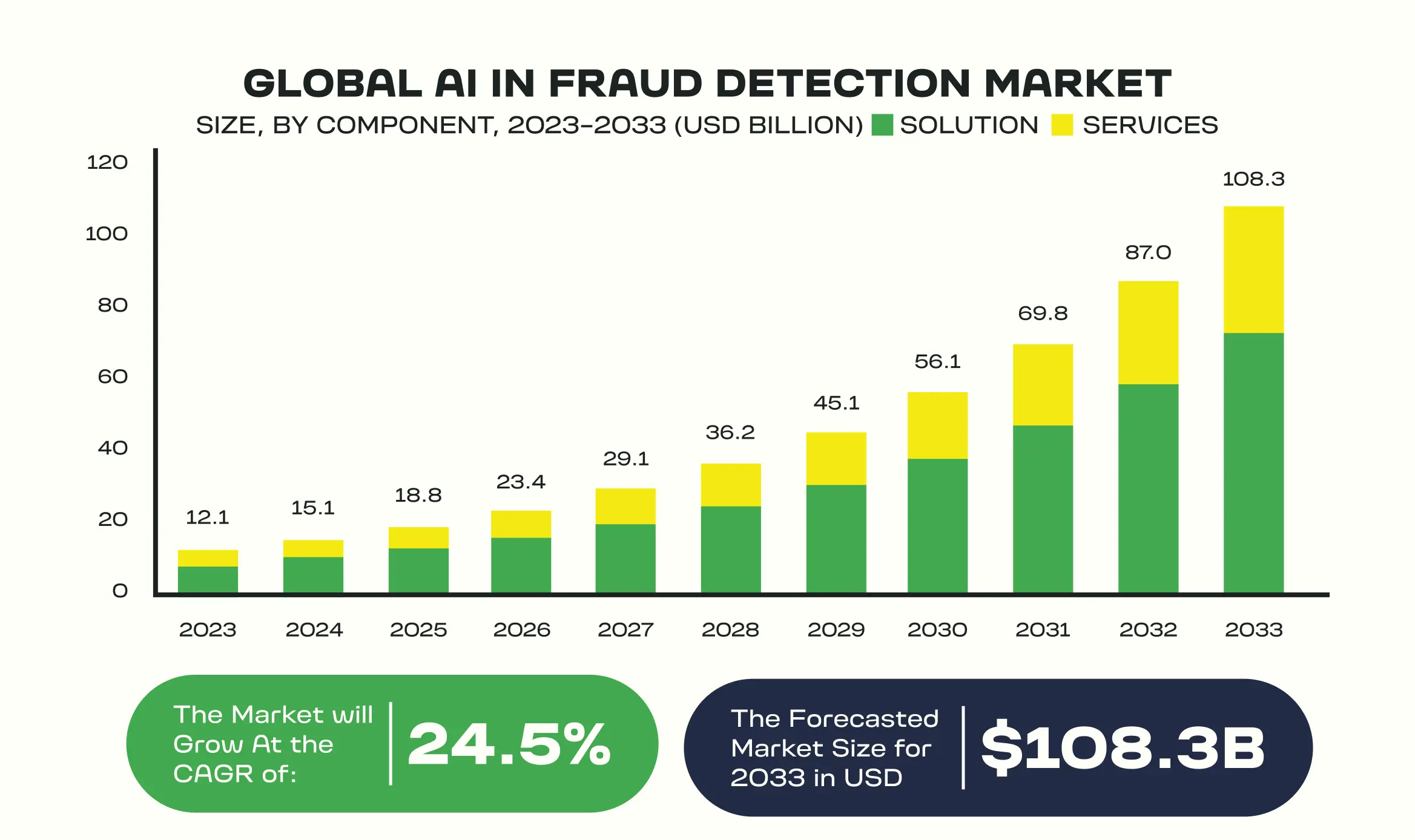
Alternative resource proposition:
https://www.precedenceresearch.com/ai-in-fraud-management-market
Selecting AI Solutions for Fraud Detection: Key Evaluation Criteria and Common Pitfalls
When selecting an AI-based fraud prevention solution, businesses need to consider not only technical specifications but also architectural compatibility with their existing platforms and infrastructure. The core evaluation criteria include model quality, interpretability, real-time processing capability, adaptability to specific business logic, and scalability. While many solution providers claim high effectiveness in detecting fraud and manipulation activities, in practice, they often generate an excessive number of false positives and lack sufficient transparency. Unlike many other solutions, Frogo provides a comprehensive set of alerts and notifications, and API integration. In addition, the platform offers detailed case studies, explanations for each scenario, and a comprehensive knowledge base, which is an important feature for organizations operating in the B2B sector, within the regulated industries.
AI Applications in Fraud Detection and Prevention for Banking, E-Commerce, and iGaming
In the banking sector, AI is widely used to perform transaction risk assessments, detect any compromised cards, and compose detailed complex client profiles. In e-commerce, advanced models are used to identify suspicious order patterns, sudden changes in customer behavior, and fraudulent use of discounts. E-commerce platforms actively combat risks associated with buyers, sellers, products, and payment processes. In the iGaming industry, the focus shifts to resolving issues and threats related to multi-accounting, bonus fraud, use of emulators and geo-restriction bypasses. Our system collects behavioral activity signals from devices and browsers, tracks anomalies in gaming sessions, and detects the use of anti-detection software or automation tools used by players.
How AI helps fight fraud on marketplaces and peer-to-peer platforms
IGaming platforms with a large number of individual users pose a specific type of risk related to social engineering, fake accounts, and schemes to deceive trust. Artificial intelligence enables the development of dynamic trust models by integrating meta-information from player / user interactions and identifying deviations from previously or generally defined behavioral patterns. Frogo can be seamlessly integrated into P2P models and marketplaces: the system analyzes reputation patterns, temporary connections between accounts and common behavioral sequences, which allows it to detect the re-occurrence of fake accounts under new credentials.
How AI models are trained for Anti-fraud mitigation: data sources and solutions architecture overview
To enable effective training of AI models for fraud detection and prevention, requires a diverse and representative dataset / data pool that includes both legitimate and fraudulent cases. Key data sources include transaction logs, user behavior patterns, device technical parameters, geolocation data, user interface (UI) interactions, and signals reflecting interactions with other users / players. Frogo uses a multi-layered architecture, including anomaly detection functions, ML classifiers, and frameworks for graph analysis. The proprietary Frogo frameworks and models are specifically retrained on periodically updated data to understand and adapt to existing and emerging fraud trends, including regional patterns and platform-specific traffic specifics.
The Critical Role of Human Factor: Analysts and Security Officers in Augmenting AI Capabilities
Despite the automation, key decisions in anti-fraud operations and frameworks often require human expert interpretation. AI is able to generate hypotheses, however testing / validating complex scenarios, responding to emerging fraud patterns, and adapting business logic remains an important task that must be carried out by humans / experts. Customer-side analysts (experts) deliver feedback, facilitate model retraining, and refine policies using their expertise, formed experience and contextual understanding. Frogo offers special interfaces for security professionals, enabling them to interpret model logic, manually review cases / incidents, and configure alert notifications. This allows for the integration of AI into operational decision-making processes while maintaining reliable human oversight.
Artificial intelligence has evolved from a supporting tool to a strategic asset in countering digital fraud. Its capability to detect and adapt to evolving threats, process vast amounts of data in real time, and minimize false positives makes it a crucial component of modern security solutions. It is critical to consider not only the accuracy of the models, but also their explainability, regulatory compliance and seamless integration into core and other related business processes.
For companies that need to maintain product focus while building a scalable and sustainable anti-fraud system, outsourcing becomes an effective and efficient option. Frogo is a solution that combines technical depth, business agility and hands-on experience in anti-fraud. We take on all the complexity – from risk modeling to incident support – so you can focus on growth, not fraud.