Financial Fraud Detection: A 2026 Playbook
Almost a third of US financial institutions (31%) report losing over $1 million to fraud. But fraud attacks aren’t just costly; they’re becoming more prevalent. Most financial organizations (60%) saw an increase in the number of fraud attacks in 2024, with AI-powered deepfake scams and fraud-as-a-service and crime-as-a-service making fraud easier to execute than ever before.
As financial fraud schemes become more sophisticated, organizations must adopt a proactive approach that integrates technology, processes, and human expertise. Modern fraudsters exploit not only technical vulnerabilities but also gaps in operational procedures and customer interactions. Real-time monitoring combined with advanced analytics enables institutions to detect unusual patterns early, while multi-layered authentication and adaptive risk scoring reduce exposure to account takeovers and synthetic identities. Furthermore, collaboration across compliance, IT, and customer service teams ensures that both preventive and detective controls are applied effectively, creating a resilient financial fraud defense strategy for 2026 and beyond.
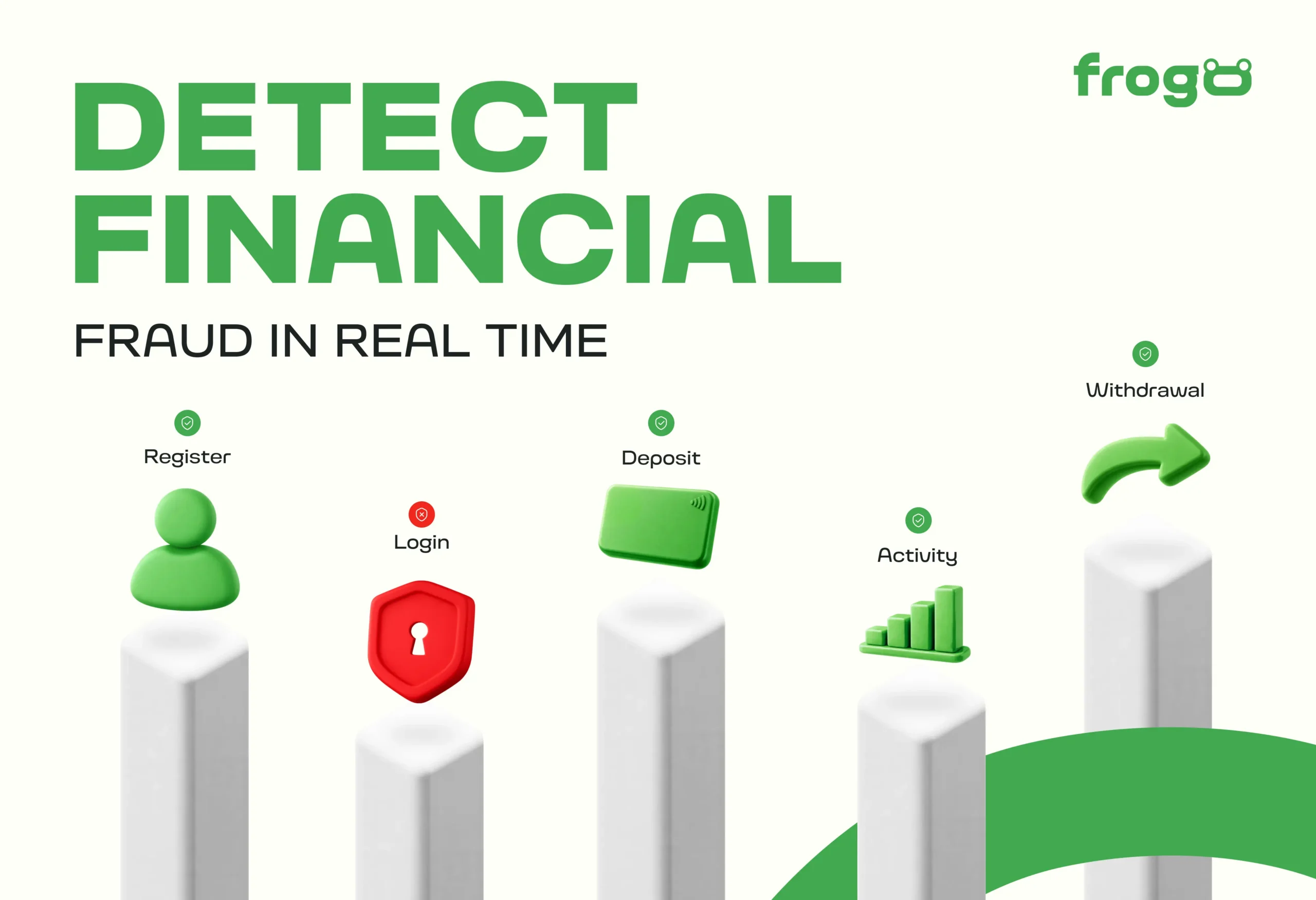
And yet, real-time financial fraud detection capabilities remain fragmented. Only half of financial organizations (47%) monitor both transactions and applications in real time.
Whether you’re an established financial organization or a fintech startup devising a financial fraud protection strategy for the first time, a holistic approach to fraud detection is a must. Here’s your guide on adopting one.
8 Common Types of Financial Fraud
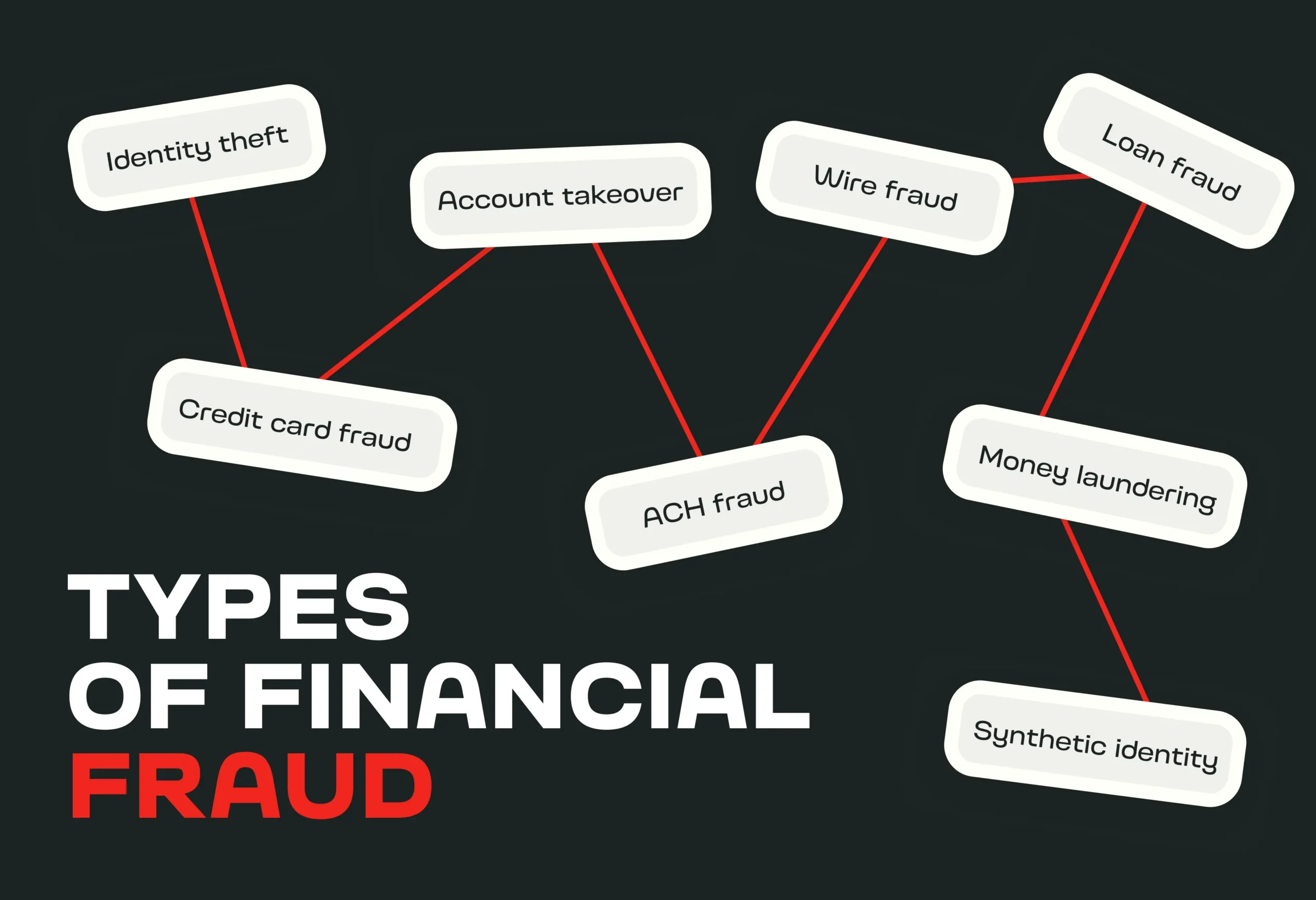
Before we talk fraud detection, let’s quickly recap the eight types of financial fraud your organization is probably facing:
- Identity theft: Stealing an individual’s real identity (SSN, bank account details, etc.) to open accounts, obtain loans, or impersonate them in phishing scams. Fraudsters often combine stolen personal information with synthetic elements to create hybrid identities, making detection more difficult. Monitoring account creation patterns and cross-referencing with historical data can help spot suspicious activity early.
- Credit card fraud: Using stolen credit card information to make unauthorized payments or withdraw cash. This can occur both online and in-person, with online card-not-present (CNP) transactions being particularly vulnerable. High-frequency small transactions (card testing) or unusual shipping patterns can be early indicators of such fraud.
- ACH fraud: Manipulating the Automated Clearing House (ACH) network to divert funds from existing accounts. Fraudsters may target payroll or vendor payments, exploiting timing and transaction volume. Integrating velocity checks and anomaly detection can alert teams to irregular patterns before significant loss occurs.
- Account takeover: Gaining unauthorized access to a legitimate user’s account via credential stuffing or brute force attacks to withdraw funds, make purchases, or exploit stored payment methods. Indicators may include logins from unusual devices or locations, rapid password changes, or multiple failed login attempts.
- Loan fraud: Misrepresenting personal information in an application, manipulating the value of collateral, or providing false employment and income information. Monitoring cross-account behavior and validating submitted documentation against third-party sources can reduce exposure.
- Social engineering: This involves manipulating businesses or individuals into sending money to an account controlled by fraudsters through phishing, impersonation, fake invoices or other deceptive tactics. This type of fraud can affect multiple payment channels, not just wire transfers. Detection strategies include monitoring for anomalies, checking beneficiary and payment details, implementing transaction approval workflows, carrying out out-of-band verification and setting up alerts for unusual destinations or payment behaviour.
- Money laundering: Using multiple accounts to deposit illicit funds and obfuscate their origin. Financial institutions should track transaction networks, frequency, and geographies to uncover hidden patterns.
Fraudsters increasingly leverage multiple channels and data sources to exploit vulnerabilities. Identity theft schemes now frequently combine stolen PII with synthetic elements, creating hybrid profiles that are harder to detect. Real-time analytics that correlate login behavior, device usage, and transaction patterns can help identify suspicious accounts before they are exploited. Incorporating dynamic risk scoring, cross-system checks, and graph-based relationship analysis ensures emerging threats are identified proactively, strengthening both detection and prevention measures.
N.B. This isn’t an exhaustive list. Internal fraud, invoice fraud, and check fraud are also worth your attention. Continuous monitoring, cross-system analytics, and machine learning models can help identify these less common but high-risk schemes.
Frogo tip: Keep in mind that detecting fraud isn’t the same as preventing it. Financial fraud prevention means stopping fraudsters in their tracks before they can cause any damage. Financial fraud detection refers to identifying when fraud is underway. Integrating behavioral analytics and real-time scoring across accounts strengthens both prevention and detection strategies.
4 Effective Methods for Detecting Financial Fraud
In broad strokes, the algorithm for fraud detection and response is simple. Your anti-fraud software identifies suspicious activity or transactions, triggering an appropriate response method in the client’s system (e.g., manual review, reauthentication, account restriction, or alerting a fraud analyst). However, in practice, the effectiveness of these systems depends on how deeply they analyze the data, correlate signals, and adapt to emerging threats.
Fraud detection today requires a multi-layered approach, combining traditional verification methods with advanced analytics and artificial intelligence. Simply relying on rules like velocity checks or threshold limits is no longer sufficient; modern fraudsters leverage AI, automation, and synthetic identities to bypass static defenses. That’s why investing in robust detection capabilities is critical.
But how exactly do these solutions identify potential fraud? Here are the four core capabilities that organizations should implement and continually enhance:
- Real-time transaction monitoring. Rule-based algorithms can enforce velocity checks to detect suspiciously frequent activity. But they’re not enough today. You need dynamic analytics and AI-assisted modeling to establish baseline behavior and detect meaningful deviations.Analytical models continuously evaluate patterns and support score optimization through feedback loops, including transaction amounts, timing, devices used, geographic locations, and payment methods. When a deviation from established behavior occurs, the system can automatically trigger a response, such as reauthentication, temporary hold, or a manual review.For instance, if a user who normally transacts from New York suddenly initiates high-value transfers from multiple countries within a short timeframe, Dynamic scoring logic and AI-assisted analytics can flag this anomaly immediately. By combining historical trends with live transactional behavior, organizations can significantly reduce the window of opportunity for fraudsters.
Moreover, multi-channel monitoring is essential. Fraudsters often exploit multiple touchpoints, including mobile apps, online portals, and call center channels. Real-time analytics can consolidate these streams, correlate unusual activities across channels, and provide a holistic risk assessment for each account.
- Behavioral analytics and device fingerprinting. Device fingerprinting assigns unique identifiers to a device to detect suspicious login attempts. Behavioral analytics identifies usual user behavior within your products (e.g., scrolling, typing habits) and detects deviations from it.Device fingerprinting captures a comprehensive profile of every device accessing your platform, including hardware specifications, operating system, browser type, plugins, screen resolution, time zone, IP geolocation, and network characteristics. By continuously comparing these fingerprints to historical patterns, systems can detect anomalies such as logins from unusual devices, rapid device changes, or multi-account usage from a single device. Behavioral analytics complements this by monitoring how users interact with your platform over time. Patterns such as navigation paths, session duration, typing speed, mouse movement, touch gestures, and scrolling habits help establish a baseline for normal user behavior. Deviations from this baseline—such as unusually rapid navigation, inconsistent scrolling, or abnormal input patterns—can indicate potential fraud, credential compromise, or bot activity. Integrating behavioral analytics with device fingerprinting allows organizations to correlate signals across multiple layers, enhancing early detection of sophisticated fraud attempts. Real-time analysis of these signals can trigger adaptive responses, including automated reauthentication, account suspension, or alerts for manual review, all while minimizing friction for genuine users.
When working with anti-fraud vendors, make sure you use service providers that are PCI DSS compliant. These companies can securely handle cardholder data when needed, convert PANs into a unique code, and help keep a consistent identifier for the same payment card across different channels. This is important because different payment processors may return different hashes for the same underlying card. A PCI DSS-certified anti-fraud partner can normalize these signals and maintain a stable token or hash, allowing your team to link activity more accurately across acquirers, reduce false negatives, and improve fraud detection without needing to expand your own PCI scope.
Financial Fraud Detection: Your Checklist
To ensure your approach to financial fraud detection covers all bases, follow our checklist to establish or refine it:
| Step | Description |
|---|---|
| Define fraud risks |
|
| Define fraud indicators and response methods |
|
| Implement a fraud detection tool |
|
| Ensure regulatory compliance |
|
| Remove data silos |
|
| Use risk scoring |
|
| Set up multi-layered authentication |
|
| Minimize false positives |
|
| Conduct regular risk assessments |
|
Continuous education and cross-functional collaboration are key for effective fraud mitigation. Finance, compliance, IT, and customer support teams should participate in joint workshops, sharing insights on emerging fraud trends and response strategies.
Simulated fraud exercises can help staff practice incident response in a controlled environment. Teams can rehearse handling suspicious transactions, applying multi-factor authentication prompts, and conducting manual reviews without disrupting legitimate user activity.
Documentation and standard operating procedures (SOPs) should be maintained and regularly updated to reflect the latest threats and regulatory requirements. Employees should be trained to escalate high-risk alerts appropriately and to communicate clearly with customers during fraud investigations, balancing security with user experience.
In addition, continuous feedback loops between analytics teams and operations ensure that fraud detection rules and thresholds remain current. By reviewing trends and anomalies on a quarterly basis, organizations can adjust rules dynamically, ensuring both preventive and reactive measures are optimized.
Investing in internal knowledge transfer ensures that expertise is retained within the organization, reducing dependence on external consultants and enhancing overall resilience against financial fraud.
Final Thoughts
Real-time financial fraud detection, while crucial, is only part of the overall fraud protection strategy. So, invest in preventive measures to avoid fraud losses in the first place, too.
Frogo combines advanced fraud detection and prevention in a single flexible platform for financial organizations. Our dynamic scoring, graph-based investigation module, and AI-powered analytics catch the most sophisticated schemes. Contact us to discuss how Frogo can help you stay one step ahead of fraudsters.