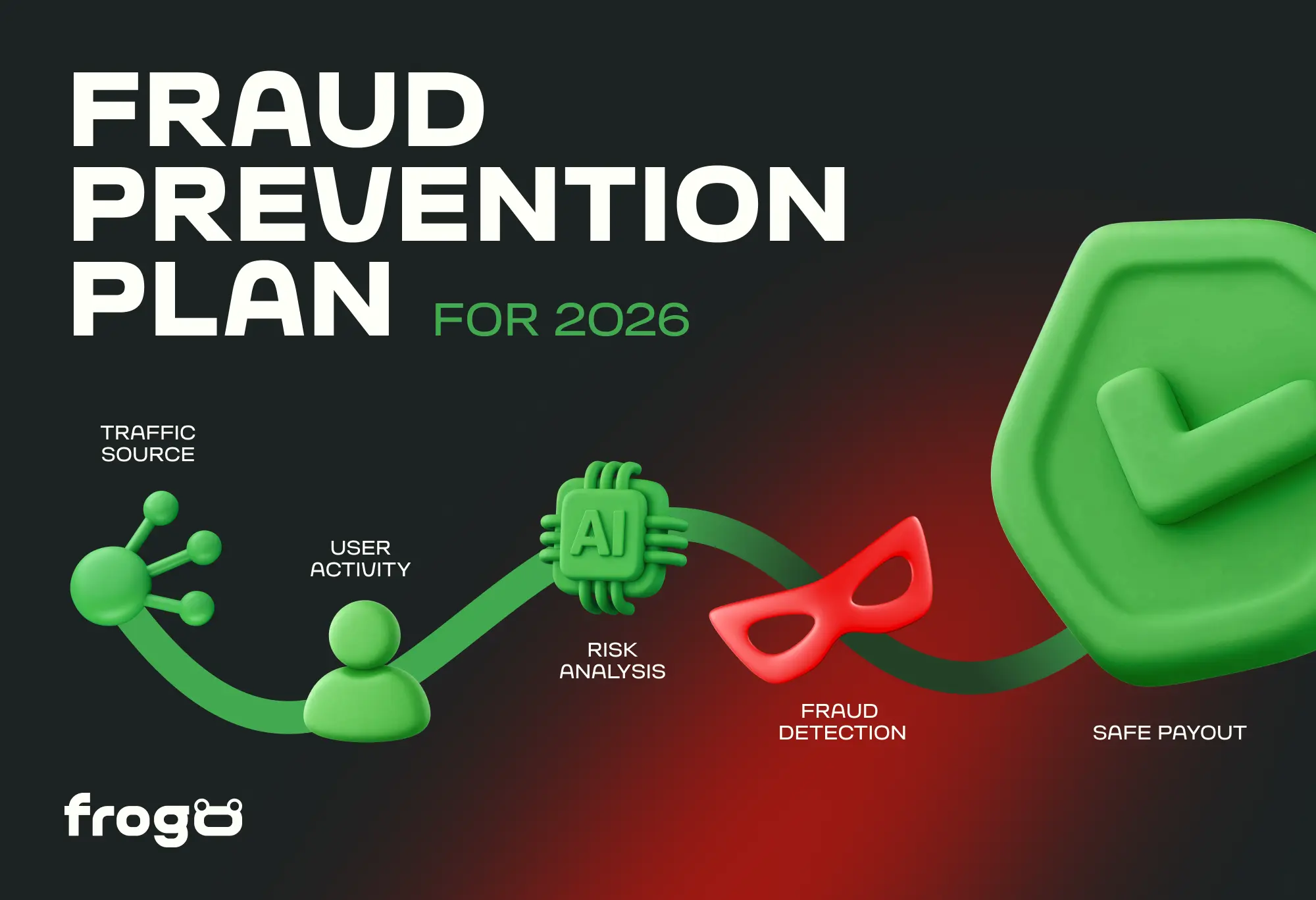
Fraud Prevention Plan: Complete Guide for 2026
Multi-accounting to abuse welcome bonuses. Users paying with stolen credit cards. Fake accounts flooding dating or affiliate platforms.
These are just a few of the potential fraud risks your business may face. Fraud is a growing concern, especially in high-risk industries such as iGaming, fintech/PSPs, crypto, affiliate marketing, dating and subscription services, and banking.
But in 2026, fraud prevention will mean more than just reacting to suspicious transactions. To achieve this, you need a clear plan, audited internal systems and workflows, and the right expert tools to help teams detect, understand, and respond to fraud before losses escalate.
Your business needs a fraud prevention plan to stay one step ahead of fraudsters and reduce losses. Companies with basic anti-fraud policies experience 50% lower fraud losses than organizations without formal policies in place.
Here’s what a fraud prevention plan is, why you need it, and how to create one.
What Is a Fraud Prevention Plan?
A fraud prevention plan is a comprehensive document that specifies all the policies, procedures, and controls your business has in place to prevent fraud. To develop one, you’ll need to conduct a thorough fraud risk assessment first.
A fraud prevention plan provides a structured framework to combat the identified threats and adapt to new ones. While a fraud prevention plan focuses on policies, culture, and controls, fraud detection strategies are designed to monitor, alert, and investigate fraud as it occurs.
Prevention is about creating the right way of doing things: knowing where fraud can enter, which teams are responsible, what systems should be checked, and how to deal with suspicious activity. The job of detection is to turn live data into decisions. This could be scoring a registration, deposit, withdrawal, promo-code activation, or another business event in real time.
Its structure varies from one organization to another, but it typically includes:
- The plan’s purpose, scope, principles, and goals.
- Identified fraud risks and fraud indicators.
- Applicable regulatory requirements.
- Fraud risks management roles and responsibilities.
- Policies and procedures for fraud prevention.
- Internal controls.
- Employee awareness programs.
- Fraud reporting and whistleblower programs.
- Fraud detection and prevention methods.
- Integration of specialized fraud prevention tools, such as Frogo, to enhance event-level scoring, explain decisions, and automate responses.
- Fraud investigation and response procedures.
- Measures for continuous improvement.
Why You Need a Fraud Prevention Plan
A cohesive, detailed fraud prevention plan enables a structured and coordinated approach to fraud prevention across the organization. That approach translates into:
- More effective resource allocation because you can clearly see which areas need focusing on to maximize fraud prevention ROI.
- Reduced fraud losses because well-thought-out, comprehensive policies and procedures prevent fraud from occurring in the first place.
- Better preparedness for future fraud threats because a plan enables continuous improvement of anti-fraud measures.
In iGaming, a fraud prevention plan helps address multi-accounting, bonus abuse, suspicious deposits and risky withdrawals. In fintech, PSPs, and crypto, it helps teams monitor high-speed transactions, fake identities, payment fraud, and account takeovers. Teams who work on marketing and affiliate programmes can use it to identify bot traffic, fake leads and people abusing promotions. Dating and subscription platforms need it to reduce affiliate fraud, fake accounts, chargebacks (when someone tries to get their money back after buying something), automated registrations and abuse in partner-driven traffic. Banks use fraud prevention planning to strengthen monitoring of payments, protect accounts, and support compliance requirements.
These examples highlight why every high-risk industry benefits from a tailored fraud prevention plan — one that reflects its specific fraud patterns and regulatory requirements.
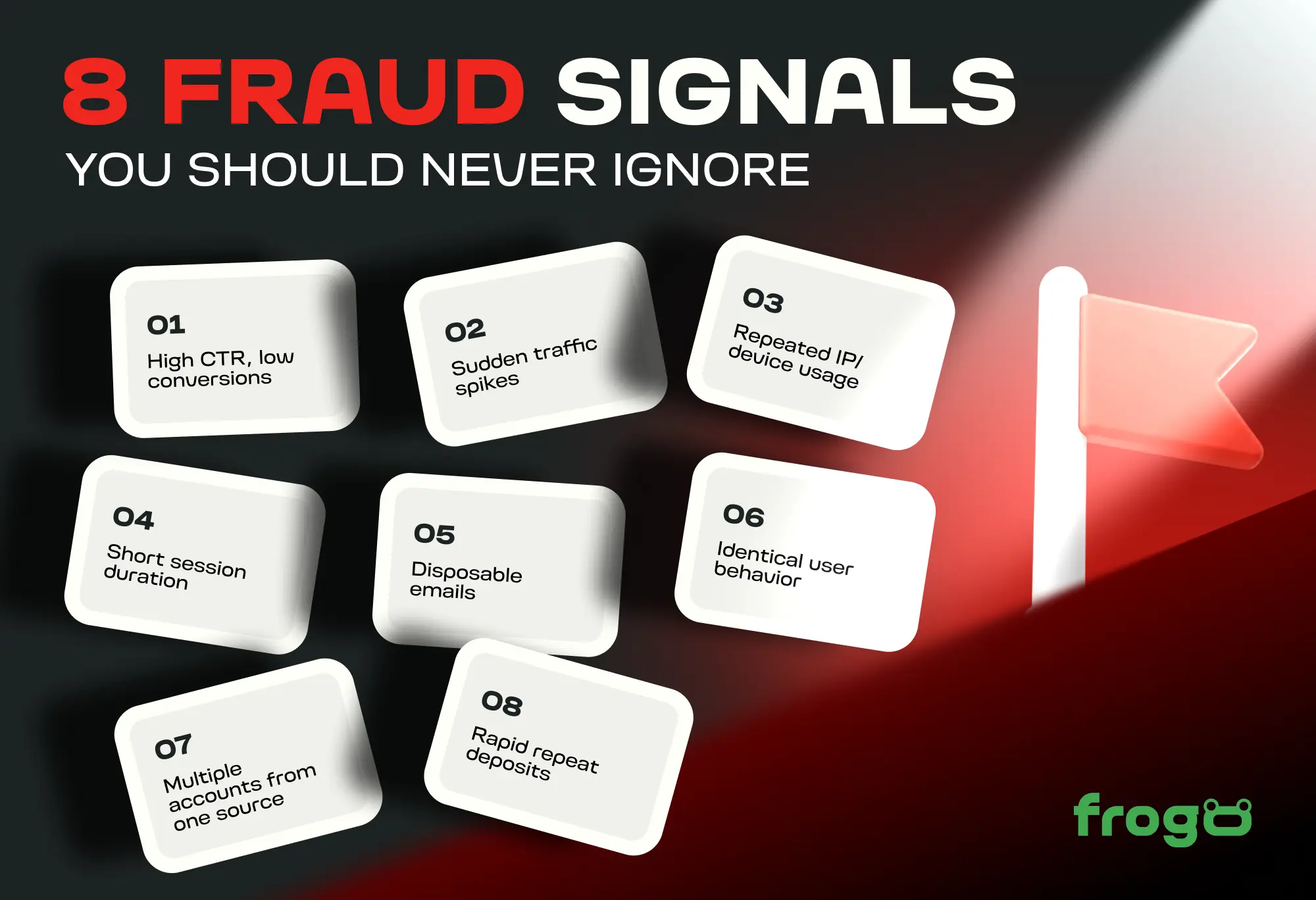
How to Create a Fraud Prevention and Detection Plan in 6 Steps
Ready to create a fraud prevention plan? Here’s how to do it in six steps.
1. Assess Your Fraud Risks
Before you can figure out how to prevent fraud from taking place, you need to have a full overview of the fraud risks it faces. They fall into two broad categories: external and internal fraud.
Common external fraud risks include:
- Account takeover
- Multi-accounting
- Identity theft and synthetic identity fraud
- Payment and credit card fraud.
To identify those risks, audit your:
- Bonus and discount abuse
- Money laundering
- Bot registrations and SMS verification abuse
- Fake leads, fake traffic, and affiliate abuse
- Chargeback and trial abuse.
To work out the fraud risks, businesses can use a fraud risk matrix, where risks are put into categories based on how likely they are and how bad they could be. This helps organisations to focus on the most important risks. For example, an online gambling company might think that multi-accounting is likely to happen and will have a big impact, while a payment service provider may focus on quickly checking a lot of accounts or looking out for unusual withdrawals.
Insiders can also pose a fraud risk to your business, and internal fraud accounts for 73% of all fraud losses. Common schemes include:
- Manual approval of suspicious payouts.
- Unauthorized balance adjustments.
- Unusual activity from employee accounts.
- Shared access to support or operations accounts.
- Actions performed outside normal working hours or thresholds.
Every organisation is different, so the risks it faces are different too. For example, online casinos have to deal with people having more than one account and abusing bonuses. Companies that deal with money and technology (fintech and crypto companies) deal with fake identities and people stealing money quickly. Affiliate platforms can have problems with bots and fake leads. Dating and subscription services are often targeted by fake accounts and chargeback abuse. Banks are still very likely to be targeted by account takeovers and event-level payment fraud.
To have an accurate overview of relevant fraud risks:
- Analyze data on past fraud incidents.
- Bring in perspectives from different teams (sales, legal, customer service, procurement, etc.).
- Consider situations that may lead to spikes in fraud (e.g., claim fraud in home insurance after natural disasters).
2. Audit Your Current Systems & Workflows
Now, it’s time to assess the weaknesses and potential vulnerabilities in your processes. To that end, audit your:
- User flows in customer-facing software (authentication, identity verification, credit card validation, etc.)
- Cybersecurity tools and measures (e.g., access controls, encryption, disaster recovery, etc.)
- Record-keeping and activity logging tools and procedures
- Internal controls for preventing insider fraud (segregation of duties, reconciliations, etc.)
- Fraud operations workflows: who reviews alerts, how decisions are documented, and how feedback is used to improve rules
Many businesses don’t realise the simple steps they could take to protect themselves against fraud. Weak rules about passwords, poor ways of controlling access, old-fashioned admin tools, and incomplete records can make it hard to spot when something strange is happening. Another often overlooked risk is relying solely on internal teams when fraud patterns evolve faster than they can respond..
In industries where there is a lot of risk, it is often safer to work with companies like Frogo that are specialised in stopping fraud. Frogo uses proprietary device intelligence to identify devices and score platform events. Decisions are transparent and supported by expert guidance. This helps teams move from doing checks on their own to having a step-by-step process for dealing with fraud.
Frogo doesn’t work as a black box. Each time a response is given, it can include the score, the result of the decision, and the rules that were triggered. This means that analysts can understand why an event was approved, reviewed, or rejected.
3. Identify Focus Areas & Set Goals
Review your list of fraud risks and classify them by likelihood and impact to set priorities right. You should allocate your resources to addressing the most likely and the most impactful fraud risks on the list. Set measurable goals to address those risks (e.g., reduce credit card fraud losses by 10%).
To establish effective goals, follow the SMART framework (Specific, Measurable, Achievable, Relevant, Time-bound). For example, you might set a goal to reduce the average fraud detection time from 5 days to 24 hours by implementing real-time monitoring and alert systems. By setting such measurable goals, your organization can stay focused and track progress more effectively. Aligning goals with business priorities, such as minimizing credit card fraud losses or enhancing employee fraud awareness, will ensure the success of your fraud prevention efforts.
Then, zero in on the focus areas for your fraud prevention plan. To do so, concentrate on the gaps that may lead to the largest fraud losses. Those can include:
- Insufficient identity fraud detection capabilities.
- Lack of fraud awareness among the customer service team.
- Lack of detailed records for fraud investigation.
- No event-level scoring for registrations, deposits, withdrawals, or promo actions.
- No clear process for reviewing triggered fraud alerts.
- No feedback loop between manual review decisions and fraud-rule improvement.
Next, identify the ideal future state (i.e., best-suited fraud prevention methods) for these areas. For example, if your fintech business frequently encounters credit card fraud, real-time transaction monitoring is an ideal solution.
Other common fraud prevention methods include:
- Training employees on common fraud schemes.
- Implementing real-time fraud detection and prevention software.
- Introducing multi-factor authentication (MFA).
- Enhancing customer identity verifications.
- Conducting background checks on employees.
- Using explainable scoring policies that can be adjusted as fraud patterns change.
4. Prepare an Action Plan & Implement It
By this point, you should have a clear view of point A (your current state of fraud prevention measures) and point B (ideal future state). Now, it’s time to outline an action plan that will take your business from point A to point B.
This action plan should outline:
- Steps to take to reach the ideal future state.
- Deadlines and milestones for each step.
- KPIs to track progress (e.g., reduction in fraud losses, increase in detected fraud).
- Required integrations, including frontend fingerprinting, backend event scoring, alerting channels, and analyst dashboards.
Once again, the exact steps will depend on your organization’s fraud risks and preparedness. For example, an organic fraud prevention plan sample would include procedures for handling incoming items that lack proper documentation.
When preparing your action plan, don’t overlook:
- Enhancing the effectiveness of internal controls.
- Putting a whistleblower program in place.
- Investing in awareness training.
- Adopting the right tools for monitoring and analytics.
- Defining which events should be scored: registration, login, deposit, withdrawal, bonus activation, promo-code use, or internal employee actions.
- Deciding where fraud decisions should be final and where they should only trigger an alert for manual review.
Frogo lets businesses use both asynchronous and synchronous integration. Asynchronous scoring is good for non-blocking processes, like registrations or customer-profile enrichment. Synchronous scoring is used for decisions made in real-time, such as withdrawals, deposits, or sensitive onboarding steps. In these cases, the client’s backend waits for Frogo’s response before taking action.
5. Implement Fraud Investigation Protocols
Fraud investigations allow you to confirm that fraud indeed occurred, gather evidence, and contact law enforcement. That increases the chances of recovering financial losses.
Furthermore, fraud investigation can reveal new fraud schemes or previously unseen gaps in your controls. That information is crucial for enhancing your fraud prevention plan, making it more effective as a result.
To outline fraud investigation protocols, define:
- What can trigger an investigation (e.g., alert from a fraud prevention tool).
- What steps need to be taken before, during, and after an investigation.
- Who will be responsible for investigations.
- What methods can be used (e.g., interviews, digital evidence).
This is especially useful for detecting multi-accounting fraud, bonus abuse networks, bot registrations, internal misuse, and accounts connected to already blocked users.
6. Revise & Improve
Fraud risks evolve with time, and your fraud prevention and detection plan should evolve with them. First, define how you’ll monitor its execution and the success of fraud prevention. Common metrics for fraud prevention include:
- Reported fraud incidents
- Prevented fraud incidents
- Response time
- Loss recovery rates
- False positive rates
- Manual review volume
- Approval, review, and reject ratios.
Monitoring measures, in turn, can involve:
- Regular progress reports on plan implementation.
- Data analytics tools for evaluating the effectiveness of fraud controls.
- Regular and surprise audits to verify internal compliance.
- Policy reviews based on triggered rules, confirmed fraud cases, and manual analyst decisions.
To keep improving the fraud prevention plan, say how often you will check and make changes to it. When you’re doing these reviews, take another look at your fraud risks, as well as your policies and measures.
Frogo helps to make things better all the time by using scoring policies, dynamic thresholds and AI-assisted reweighting. The system can analyse how well the rules are working, identify triggers that create false positives, and suggest changes. The operator makes the final changes, which means the process is expert-driven and transparent.
Fraud Prevention Plan: Your Checklist
Here’s your checklist for creating an effective fraud prevention plan for your business.
Use this checklist not just once, but as a regular reference point. Revisit it quarterly to ensure that your fraud prevention plan evolves alongside new fraud trends and emerging threats. Regularly update your plan to reflect changes in the industry, legislation, and the evolving tactics used by fraudsters.
| Stage | Steps |
|---|---|
| Analyzing fraud risks |
|
| Analyzing systems and workflows |
|
| Setting priorities |
|
| Preparing an action plan |
|
| Putting fraud investigations in place |
|
| Revising and improving |
|
Final Thoughts
Even the best fraud prevention plan will not work without people being watchful. It is very important that everyone knows what their role is in preventing fraud. If you don’t have a fraud prevention plan, it’s like trying to hit a target blindfolded. You might be moving, but you’re not making any progress. The plan makes things clear: it explains the risks, how to deal with them, and how to know if it’s working. In 2026, the best way to stop fraud is to start with awareness, then check internal systems and workflows, and finally hire professionals who know how fraud works in your industry.
Frogo helps high-risk digital businesses to become more mature. Our expert-driven SaaS platform uses proprietary device fingerprinting, event-level scoring, explainable decision triggers, graph analytics, notifications, and continuous policy improvement. Instead of treating fraud prevention as a static document, Frogo helps turn it into a live operational workflow for risk, product, marketing, payments, retention, and support teams.
Not sure where to start with a fraud prevention plan? At Frogo, we help businesses spot fraud risks, work better together, and stop fraud by having clear, simple rules that can be used in any industry. Talk to our experts to discuss how Frogo can help you build a fraud prevention plan that works in practice — not just on paper.