Fraud Signals Explained: Which Data Points Matter Most?
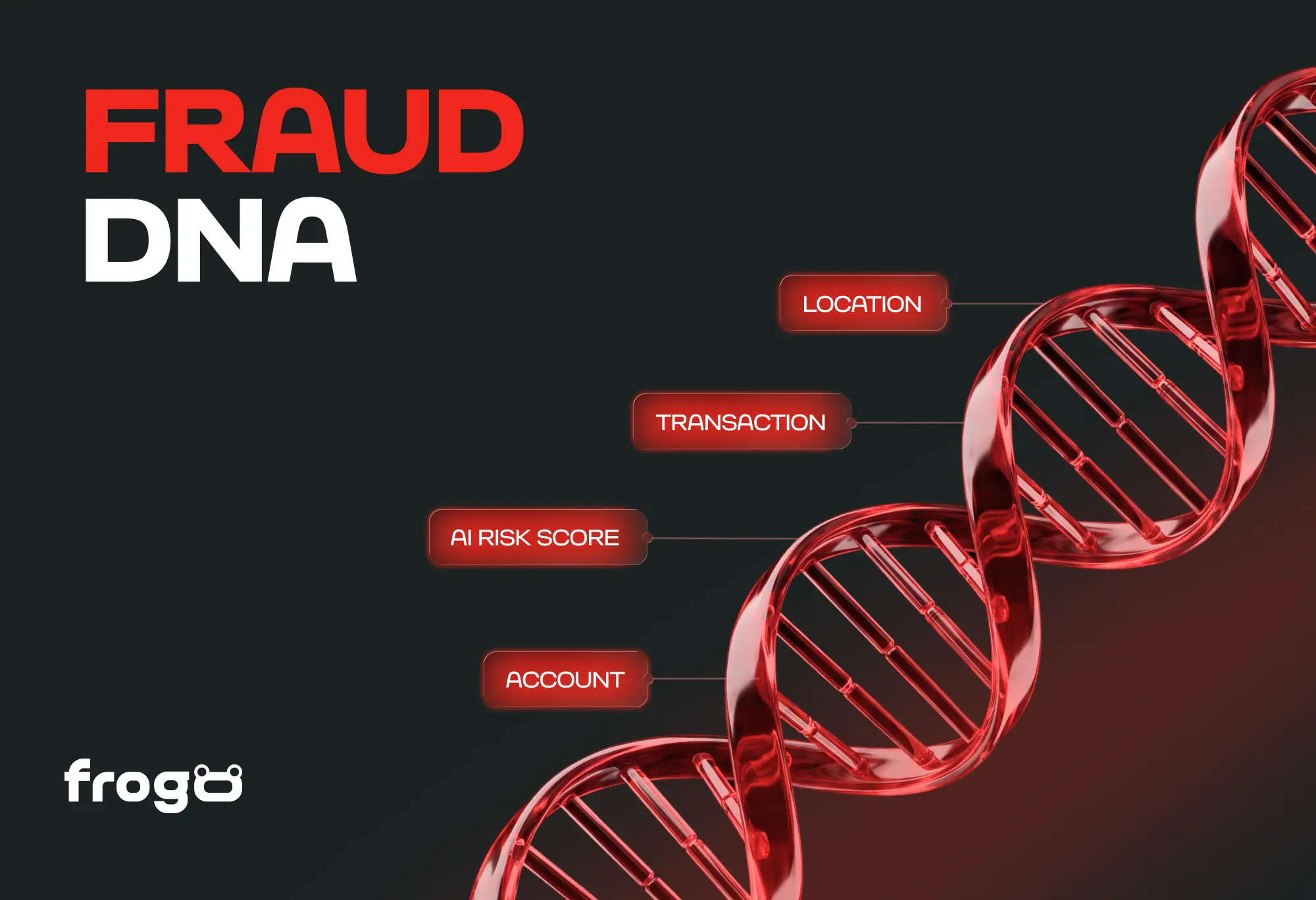
Fraud signals are the raw material of modern fraud detection. They are the small clues hidden inside logins, devices, payments, locations, accounts, and user behavior. One clue rarely tells the whole story: a strange IP address, a new device, or a fast checkout may mean fraud, or it may simply mean a real customer is traveling and in a hurry.
That is why fraud teams do not usually rely on a single indicator. They combine multiple fraud indicators to understand transaction risk and decide whether activity should be approved, challenged, reviewed, or blocked.
For online businesses, marketplaces, fintech platforms, gaming products, and e-commerce merchants, smart fraud prevention depends on context. The best systems compare signals across sessions, accounts, transactions, devices, and historical behavior.
What Are Fraud Signals?
Fraud signals are data points that suggest a transaction, account, session, or user action may carry elevated risk. They can come from network data, device information, payment behavior, account history, user actions, or previous investigations.
A signal may be obvious, such as a known bad IP address. It may also be subtle, like a user changing devices, payment methods, and shipping country within one short session. Taken separately, each action may look ordinary. Together, they become suspicious.
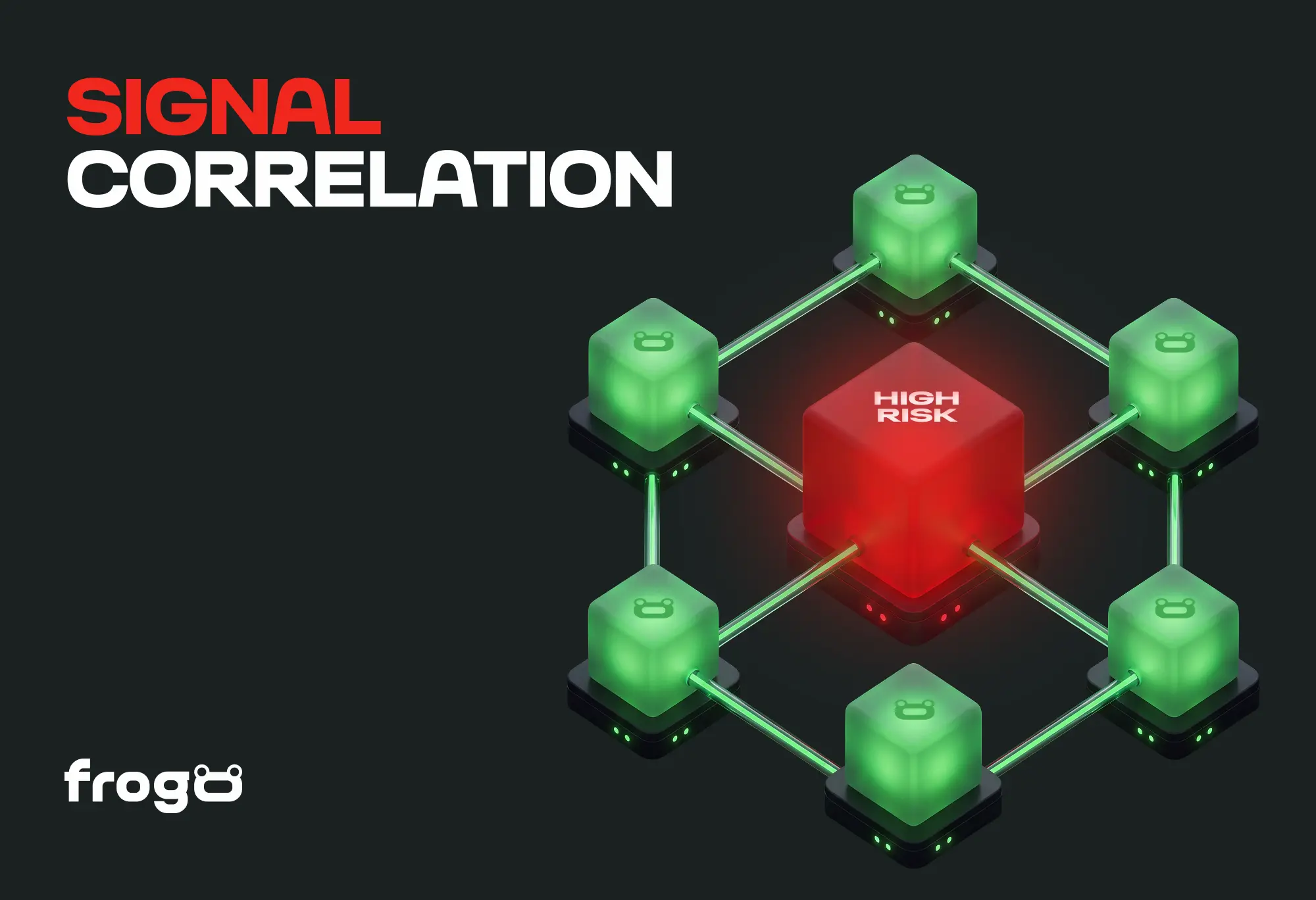
This is where signal correlation matters. A single geolocation mismatch may not mean much. Add a new device, high transaction velocity, failed payment attempts, and a young account, and the risk picture changes quickly.
Fraud teams use these signals to guide risk scoring, fraud monitoring, and manual review. They help answer one basic question: does this activity fit the expected pattern, or does something look wrong?
Why Individual Fraud Signals Are Rarely Enough
The inconvenient truth is that a single signal can mislead. A VPN user may simply care about privacy. A customer buying from another country may be traveling. A high-value purchase may be normal for a loyal account. Even a failed payment attempt can be a typo rather than a fraud attempt.
This is why good fraud detection depends on context. The goal is not to panic every time one data point looks unusual, but to understand whether several data points point in the same direction.
For example:
| Single signal | Weak interpretation | Stronger interpretation with context |
|---|---|---|
| VPN detection | User may be protecting privacy | VPN plus new device, new card, and rushed checkout |
| High order value | Customer may be making a large purchase | High value plus new account and shipping mismatch |
| Failed payment | Mistyped details | Many failures across cards in minutes |
| New device | Customer upgraded phone | New device plus password reset and payout change |
| Location change | User may be traveling | Impossible travel plus account setting changes |
Fraud is rarely one loud alarm. More often, it is a messy cluster of weak signals that only become meaningful when grouped together.
How Fraud Teams Evaluate Risk Behind the Scenes
Behind the scenes, fraud teams and risk engines combine signals through several methods. Some are automated, some are manual, and the better systems usually use both.
The process often includes signal weighting, risk scoring, behavioral analysis, rule-based detection, and automated decision-making. A risky IP may add a few points, a new device may add more, and a payment from a card range associated with previous abuse may add even more. Once the score reaches a certain level, the system may challenge the user, send the event for review, or block it.
A typical risk workflow looks like this:
- Collect session, device, network, account, and transaction data.
- Compare current activity with past account history and known fraud patterns.
- Apply risk rules for obvious red flags and business-specific thresholds.
- Use fraud scoring to combine signals into one assessment.
- Approve, challenge, reject, or route the case to manual review.
The important part is flexibility. Static rules alone become outdated fast: fraudsters adapt, and legitimate users change their behavior too. Smart fraud analytics should learn from outcomes, disputes, confirmed fraud, false positives, and analyst feedback.
Network and Connection Signals
Network signals show where a connection is coming from and whether that connection carries risk.
They play an important role in detecting payment fraud, account attacks, multi-account schemes, dormant account abuse, unusual logins, and compromised account activity.
IP Reputation
IP reputation looks at whether an IP address has been linked to previous abuse, bot activity, spam, account creation attacks, credential stuffing, or suspicious payment attempts.
An IP address with a poor reputation is more likely to be involved in fraud, because abusive campaigns often reuse the same data centers, compromised machines, proxy networks, and suspicious hosting providers.
But IP data has limits. Shared networks, mobile carriers, offices, universities, and public Wi-Fi can create a lot of noise. A poor IP reputation should prompt closer scrutiny, not an automatic assumption that the user has done something wrong.
Proxy and VPN Usage
Proxy detection and VPN detection help identify when users may be hiding or changing their apparent location. This matters because anonymization can complicate identity checks, payment checks, and location-based risk assessment.
An important caveat: VPN usage alone does not prove fraud. Plenty of normal users rely on VPNs for privacy, work, travel, or security, and blocking every VPN user is a quick way to annoy good customers.
The risk increases when proxy or VPN usage appears alongside other signals: a new account, a payment mismatch, repeated failed logins, a high order value, or unusual checkout speed.
Connection Consistency
Connection consistency looks at whether access behavior makes sense over time. A user logging in from the same region, the same type of network, and the same device pattern is easier to trust. Sudden changes may deserve review.
Risk teams often watch for location anomalies, impossible travel, unexpected country changes, and repeated switching between networks. One location change is normal; five countries in an hour is not.
Connection data becomes especially useful when combined with session analysis. A suspicious session may include fast navigation, no browsing behavior, immediate checkout, and payment attempts from multiple cards.
Device Signals
Device data is one of the most valuable parts of modern fraud prevention software, because users can change emails, names, cards, and IP addresses far more easily than they can make every device look completely unrelated.
Good device intelligence helps link activity across accounts and sessions. It can reveal repeat users, automated setups, device farms, emulators, and coordinated abuse.
Device Fingerprinting
Device fingerprinting identifies devices based on technical characteristics such as browser settings, operating system, screen configuration, installed features, language, time zone, and other signals.
It is useful because fraudsters often create multiple accounts while reusing the same device or environment. If ten accounts look different on paper but share a device fingerprint, that relationship matters.
For fraud monitoring, device fingerprinting can help detect account creation abuse, payment testing, bonus abuse, and repeated disputes. It gives the system memory, even when the user tries to appear new.
Device Reuse
Device reuse becomes suspicious when a single device is connected to many accounts, payment methods, shipping addresses, or identities. This can point to account takeover, bonus hunting, or an account farm.
Not all device reuse is negative, however. Members of the same household often share a laptop, and in shared environments such as offices, universities, or internet cafes, many people use the same computers and networks.
Suspicious Device Changes
Sudden device changes can point to account takeover or account resale. For example, a long-term user logs in from a new device, changes the password, adds a new payment method, and immediately attempts a high-value transaction.
A new device alone is not enough to raise an alarm. But a new device combined with risky user behavior, payment changes, and location inconsistencies can indicate that control of the account has shifted.
Transaction and Payment Signals
Transaction-level signals show how money moves through the system. They are central to transaction monitoring, especially for merchants and platforms exposed to card testing, refund abuse, stolen credentials, or fake purchases.
Transaction Velocity
Transaction velocity measures how quickly actions happen. This can include payment attempts, purchases, refunds, account changes, coupon uses, withdrawals, or login attempts.
High velocity may suggest automation, credential testing, card testing, or coordinated abuse. One failed payment may be harmless, but twenty failed payments across several cards in a few minutes tell a very different story.
Velocity should be measured across several dimensions: account, device, payment method, IP, email domain, card BIN, shipping address, and customer segment. Fraudsters often spread their activity to avoid simple limits.
Payment Method Consistency
Payment behavior tells a story. A loyal customer using the same card for months is very different from a new account trying several cards in one session.
Sudden payment method changes may deserve extra checks, especially if they happen after password resets, account changes, or unusual login activity. A customer adding a new card is normal. A customer adding five cards after logging in from a new country is not exactly comforting.
Payment consistency should also cover billing details, shipping information, failed attempts, refund patterns, and disputes.
BIN and Card Signals
Card-related signals can reveal patterns tied to the issuer, BIN anomalies, and payment inconsistencies. A sudden increase in attempts from the same card range may indicate testing or enumeration, and repeated declines on the same card may be a sign of automated abuse. These signals are especially important for payment fraud detection because card attacks often appear first as failed authorizations. Ignoring declines means missing the early warnings.
A few patterns are worth watching in card activity: unusual concentrations of the same BIN ranges, many cards linked to one account or device, and billing data that does not match other details.
Account-Level Signals
Account data adds history. Without it, every transaction has to be judged in isolation. History lets fraud teams check whether current activity is consistent with past behavior.
Multi-Accounting Indicators
Multi-accounting occurs when one person or group controls multiple accounts to claim incentives, bypass limits, run payment tests, or hide harmful behavior.
Links between accounts can show up as shared devices, matching names, repeated addresses, similar user behavior, shared payment details, or simultaneous access from the same device. Each of these links is usually weak on its own, but together they become strong.
Historical Risk Events
Past events matter. Previous disputes, failed verification, suspicious refunds, blocked transactions, or confirmed fraud investigations should influence future risk assessments.
That does not mean one bad event should punish a user forever. But account history helps prevent repeat abuse: a customer with several past disputes should not be treated exactly like a new customer with no risk record.
Historical context also helps reduce false positives. A trusted user with years of normal activity may deserve a softer response than a brand-new account showing the same signal.
How Risk Scoring Combines Fraud Signals
Risk scoring consolidates many separate signals into a single, usable assessment. Instead of making a decision on every individual clue, the system aggregates them into one score that reflects the overall risk.
| Signal group | Example signals | Possible use in scoring |
|---|---|---|
| Network | IP reputation, proxy use, location shifts | Detect risky infrastructure |
| Device | Fingerprint, reuse, device changes | Link accounts and sessions |
| Transaction | Amount, velocity, payment failures | Identify payment abuse |
| Account | Age, history, disputes, verification | Add behavioral context |
| Location | Geolocation mismatch, impossible travel | Spot location-based risk |
| Behavior | Session speed, navigation, repeated actions | Detect automation or takeover |
A smart score should adapt to context, because the same signal can mean different things for different users. A new device for a trusted customer may be low risk. A new device for a fresh account making a high-value purchase may be much riskier.
This is the point of modern fraud prevention software: not to replace human judgment completely, but to combine more signals than a human could ever review manually. Good systems use fraud analytics, machine learning, rules, and analyst feedback to improve decisions over time.
The best scoring setups also explain why a transaction was flagged. Black-box scores can frustrate fraud teams, while clear signal breakdowns help analysts act faster and tune controls better.
Fraud signals become far more useful when they are analyzed together rather than treated as isolated warnings. Frogo helps businesses bring multiple risk indicators into a single fraud detection process, making it easier to identify suspicious patterns, assess risk, and make more informed decisions without relying on one signal alone. Explore Frogo’s fraud detection.
Final Thoughts
Effective fraud detection is not about finding one perfect signal. There is no magic data point that reliably separates good users from bad ones.
The strongest fraud prevention strategies focus on the relationships between signals: devices connected to accounts, locations tied to sessions, payments tied to behavior, and transactions compared with history.
A single VPN login may be fine. A VPN login plus a new device, high transaction velocity, a payment mismatch, and suspicious account changes is another story.
That is why businesses need strong fraud signals, flexible risk scoring, ongoing fraud monitoring, and thoughtful transaction monitoring. Add device intelligence, behavioral analytics, anomaly detection, and clear risk rules, and the picture becomes much sharper.