Fraud Prevention Specialist: What They Do & Why You Need One
Does your annual budget have an expense line item for fraud losses? Probably not. Yet, AFCE estimates that the median fraud losses amount to $145,000 per case.
These losses are by no means inevitable. You can avoid them by having a solid fraud prevention strategy in place. Any plan should have three major components: people, processes, and technology. While technology — including AI in fraud prevention — plays a critical role in detecting suspicious patterns at scale, it still needs to be guided by skilled professionals to deliver real results..
Fraud prevention specialists assess your fraud risks, devise and implement strategies to prevent them, and stay on top of emerging trends. Without them, even the most sophisticated software won’t magically address all of your fraud risks.
Fraud Prevention Specialist: Job Description
Fraud prevention specialists are in high demand. While U.S. job growth averages 0.3%, fraud prevention jobs are growing at an astounding 6%, according to Zippia.
But who are fraud prevention specialists, and what do they do?
In general, a fraud prevention specialist monitors business activities and develops, implements, and improves a fraud prevention strategy. The exact responsibilities of a fraud prevention specialist vary from one organization to another, but they typically include:
- Analyzing and monitoring events to identify suspicious activity
- Investigating incidents to identify emerging schemes or gaps in fraud prevention
- Assessing existing fraud risks
- Developing and updating fraud prevention policies and procedures
- Implementing existing fraud prevention policies and procedures
- Preparing detailed reports on fraud risks, incidents, and policies
- Auditing business processes to find potential exploits
- Verifying internal compliance with fraud prevention policies and procedures
- Ensuring compliance with legal fraud prevention requirements (KYC/KYB checks, anti-money laundering mechanisms)
- Raising awareness about common fraud schemes among employees
A complete fraud prevention specialist job description often differentiates between junior, mid-level, and senior roles. A junior or mid-level specialist usually focuses on day-to-day monitoring, reporting, and supporting investigations. A senior fraud prevention and detection specialist, however, takes ownership of designing strategy, leading teams, and communicating directly with executives or regulators.
For example, a senior fraud prevention specialist will not only review suspicious events but also decide on new risk-scoring rules, approve policy changes, and oversee compliance with AML/CFT frameworks. Many businesses now require certifications such as the Certified Anti-Fraud Specialist (CAFS), Certified Fraud Examiner (CFE), or Certified AML and Fraud Professional (CAFP) to validate expertise at the senior level.
Defining clear responsibilities across job levels helps avoid gaps in protection. Whether junior or senior, each fraud prevention specialist contributes to building a resilient anti-fraud ecosystem.
A typical day in the life of a fraud prevention specialist can involve:
- Coordinating fraud prevention measures across the organization
- Using fraud detection and prevention software to investigate cases and pinpoint trends
- Leveraging data analytics tools to detect suspicious activity
- Preparing structured reports on suspicious activity for executives, auditors, and regulators
- Building short- and mid-term predictions of fraud activity (by segment, channel, payment method) to inform staffing, promo policy, and budget
- Analyzing the impact of existing risk policies on conversion across the product (e.g., deposit/withdrawal funnels, KYC step-up, bonus redemption) and recommending changes
- Staying up to date on the latest developments in fraud prevention
- Auditing internal fraud prevention mechanisms
A fraud prevention and detection specialist, senior or not, requires skills like:
- Proficiency in data analysis tools and statistical methods
- Good grasp of applicable regulations and compliance standards
- Solid understanding of cybersecurity measures and best practices
- Experience with fraud detection and prevention software
- Strong problem-solving and analytical thinking skills
- Solid investigative and reporting skills
- Excellent interpersonal and communication skills
When Do You Need a Fraud Prevention Specialist?
Yes, not every business needs a fraud prevention specialist on their payroll. That said, here are six tell-tale signs you should hire one in the near future.
You’ve Recently Suffered a Large-Scale Fraud Incident
If your business recently fell victim to a scam that cost you an arm and a leg, that must’ve been your wake-up call. Bringing a fraud prevention specialist on board will help you understand how fraud could happen in the first place and how you can avoid a repeat down the road.
You’re Experiencing Rapid Growth
A steady rise in revenue, customers, or employees often coincides with an increase in fraud attempts. Put simply, your business becomes a more alluring target. A fraud prevention specialist will help you introduce internal controls to ensure your business can withstand these attempts.
You Have Strict Compliance Requirements
If you’re running a business in a highly regulated industry, you have no choice but to comply with fraud prevention regulations. They typically concern:
- Anti-money laundering and countering of terrorism financing (AML/CFT)
- Know-your-customer and know-your-business checks (KYC/KYB)
- Transaction monitoring and suspicious activity reporting
A fraud prevention specialist will ensure your policies and procedures fully align with legal requirements in your jurisdiction(s). That both prevents fraud and mitigates non-compliance risks (penalties, fines, reputational damages).
You’re Operating in a High-Risk Industry
Some industries are naturally more exposed to fraud attempts than others. They include banking and financial services, e-commerce, iGaming, healthcare, and insurance. PwC’s Global Economic Crime Survey shows that 46% of financial services firms reported fraud in the past two years, despite heavy investments in controls. The Association of Certified Fraud Examiners (ACFE) estimates that insurance fraud alone costs over $300 billion annually in the U.S.
In eCommerce, chargeback fraud and account takeover peak during sales campaigns like Black Friday. In iGaming, fraudsters exploit welcome bonuses and farm synthetic accounts to extract value. These examples highlight why a fraud prevention specialist is indispensable — combining continuous monitoring with preventive strategies to protect both revenue and reputation. If you operate in one of these domains, you’ll need a specialist from the get-go.
You’re Under Pressure from Investors
A sharp uptick in fraud cases or high-profile attempts can force your investors to demand a fraud prevention hire. Potential investors in high-risk industries, on the other hand, won’t even think about investing if you can’t show you’re serious about fraud prevention.
Your Employees Need Anti-Fraud Training
No matter how sophisticated your software systems are, your employees will always remain a potential point of failure (case in point: spoofing and phishing). Fraud prevention specialists will help them spot common fraud schemes and update them on emerging trends.
Startups and scale-ups often underestimate the importance of hiring a fraud prevention specialist early. In the rush to onboard new customers and expand globally, fraud controls can be an afterthought. Yet this is exactly when fraudsters strike, exploiting weak onboarding, inconsistent KYC checks, or poor transaction monitoring.
As companies scale, fraud risks grow in complexity: multiple jurisdictions with different AML/KYC rules, higher transaction volumes, and increased exposure to account takeovers or chargeback abuse. Having a fraud prevention specialist ensures that fraud prevention tips are applied systematically, with controls that scale along with the business.
Investors also increasingly expect robust fraud prevention measures. Venture capital firms and private equity funds often ask startups to demonstrate fraud risk management maturity before releasing funds. A company with a fraud prevention specialist on the team signals readiness, discipline, and reduced operational risk.
Frogo tip: Don’t wait until after a major fraud incident to hire. Building resilience early gives you an advantage with both fraudsters and investors — and prevents losses that could derail your growth trajectory.
Don’t Fall Victim to These Common Misconceptions
You might be mistakenly convinced that you don’t need a fraud prevention specialist if you already have a cybersecurity team or fraud prevention software in place. Here’s why those are two common misconceptions.
Cybersecurity Team Can Take on Fraud Prevention
Cybersecurity and fraud prevention are two related (and sometimes overlapping) functions, but they’re not the same. Cybersecurity specialists are focused on protecting your business against cybersecurity risks, such as:
- DDoS attacks
- Unauthorized system access
- Data breaches
- Ransomware attacks
- Malware attacks
- Business email compromise (BEC) attacks
- Network security risks (piggybacking, wardriving, evil twin attacks)
As you can see, these risks differ from common fraud risks. Additionally, cybersecurity specialists often lack the expertise to devise and implement effective fraud prevention strategies.
So, you need both cybersecurity and fraud prevention specialists to protect your business.
Fraud Prevention Software Can’t Replace a Specialist
Software alone won’t be enough to address all fraud risks effectively. You need a specialist to respond to alerts, use the investigation module, and identify patterns in fraud attempts.
Another misconception is that modern AI/ML-driven software can fully replace a human fraud prevention specialist. While fraud prevention software is powerful for pattern recognition and anomaly detection, it lacks contextual judgment. A flagged transaction may be suspicious in one scenario but entirely legitimate in another. Only a specialist can apply domain knowledge, assess customer behavior, and decide on the correct action.
According to Gartner, by 2026 up to 30% of enterprises will no longer consider standalone identity verification and authentication solutions reliable due to the growing impact of AI-generated deepfakes. To mitigate this risk, Gartner emphasizes the need for a layered approach, combining presentation attack detection (PAD), injection attack detection (IAD), image inspection, and additional behavioral and device-based signals.
In this context, AI enables scalable detection of sophisticated attacks, while security and fraud specialists play a critical role in interpreting signals, validating risks, and ensuring that mitigation strategies are applied effectively across identity verification processes.
Case in point: At Frogo, we work closely with operators to continuously review and refine their fraud risk management strategies, ensuring maximum ROI from the platform. This includes helping clients design scoring policies, calibrate thresholds, and optimize automation versus manual review — as well as defining where experienced fraud specialists add the most value, such as investigating edge cases, validating AI-driven recommendations, and fine-tuning rules based on real operational feedback.
How to Hire a Fraud Prevention Specialist
Ready to start recruiting? Here are the 8 steps to take:
- Define role and responsibilities. Be clear about what you expect your new hire to do, and make sure their duties align with your business needs.
- Identify relevant skills and certifications. Consider both hard and soft skills; prioritize attention to detail, problem-solving, and analytical thinking. As for certifications, consider Certified Anti-Fraud Specialist (CAFS) and Certified AML and Fraud Professional (CAFP).
- Prepare a compelling job description. Include the company information, role summary, responsibilities, requirements, working conditions, and benefits. Be both thorough and concise.
- Advertise across multiple channels. Use job boards, social media, networking, and internal channels to reach potential candidates.
- Receive and screen applications. Go through applications to identify the ones with relevant skills, certifications, and experience.
- Interview shortlisted candidates. Have one-on-one or panel interviews and assess the candidates’ technical and soft skills, as well as their cultural fit. You can also ask them to complete pre-employment tests.
- Conduct background and reference checks. Make sure references hold up, and use a background check to weed out potentially unreliable job seekers.
- Seal the deal. Choose your ideal candidate, make the job offer, and sign all the documents once they agree.
Frogo tip: Your job doesn’t stop here! You’ll need to onboard your new hire well. Introduce them to your company’s culture, policies, and role, and offer role-specific training if needed. Consider assigning them a mentor, too. On top of that, provide opportunities for their continuous learning (workshops, industry events, etc.).
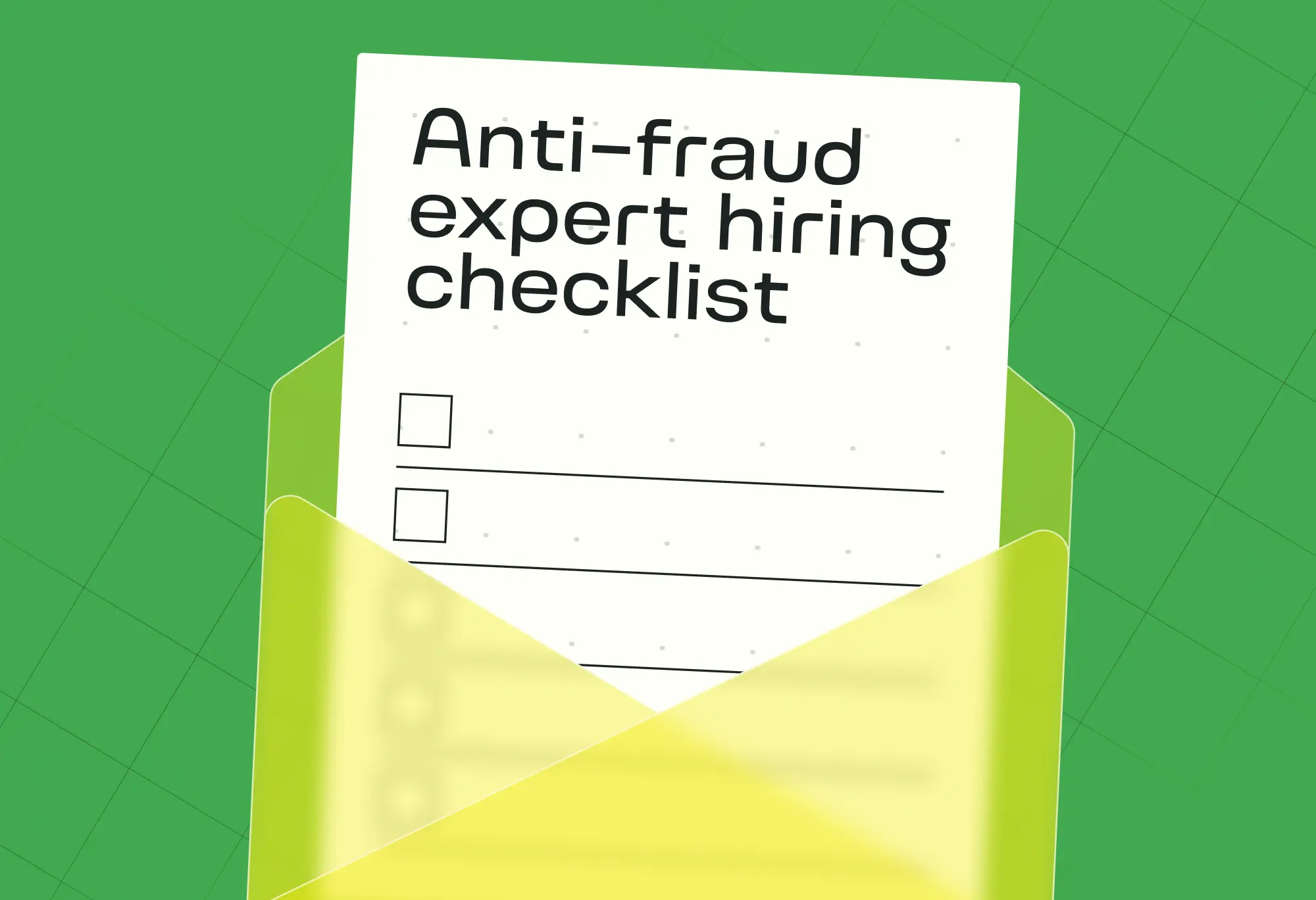
Hiring a Fraud Prevention Specialist: Your Checklist
Here’s your checklist for recruiting a specialist poised to become a valuable addition to your company:
| Step | Description |
|---|---|
| Understand who you need |
|
| Attract candidates |
|
| Find the ideal candidate |
|
| Hire and onboard |
|
Final Thoughts
Without a fraud prevention specialist, you’ll struggle to develop a cohesive fraud strategy, coordinate your departments while implementing it, and identify emerging threats in time. That’s why having a dedicated specialist is a must if you’re serious about addressing your fraud risks.
Not sure about your ideal fraud prevention specialist’s profile? At Frogo, we go beyond adapting our platform to your needs. As part of our fraud strategy consulting, we can help you identify the talent gaps in your team. Talk to our experts to discuss how Frogo can help you level up your fraud risk management.